
In 2015, world leaders made a bold promise: to achieve the Sustainable Development Goals (SDGs) by 2030. These 17 goals laid out a vision of a healthier, more equitable world—where every child has access to nutritious food, where maternal deaths are rare, and where the world’s poorest countries have a real shot at sustained growth.
But with just five years to go, the finish line feels increasingly out of reach.
As a Senegalese-American who co-leads a community-rooted health organization in Dakar, I see every day what’s working—and what’s not. I see progress born not from policy papers or pledges, but from everyday people solving extraordinary problems with grit, care, and deep local knowledge.
We will not reach the SDGs through slogans or summit declarations. We will get there only through consistent investment in local systems, trusted frontline workers, and community-led solutions. When it comes to maternal health, nutrition, or access to care, the most enduring impact happens when communities aren’t just recipients of aid—but the architects of their own future.
Yet at this critical moment, the United States is retreating. Foreign aid budgets are shrinking. Lifesaving global health initiatives are being sidelined. Programs that once connected Americans to communities like mine are being dismantled—not because they failed, but because of shifting federal priorities.
But this moment isn’t just about what governments do or don’t do. It’s about who we are—as Americans, as global citizens, and as human beings. Will we define ourselves by what our institutions pull back from—or by how we step up?
I chose the latter.
At age 12, I immigrated to the United States. I was labeled an “at-risk” student. But I saw potential—not only in myself, but in every child, every caregiver, every community I’ve worked with since. That belief carried me from Mississippi to Harvard, and then back home to Senegal, where I co-founded the Foundation for a Healthier Senegal (FOHSEN) with my father in 2019.
At FOHSEN, we don’t impose solutions—we co-create them. We work with villages to identify trusted individuals—women, youth, respected elders—who are then trained to deliver life-saving health services right to the doorsteps of families in the most remote parts of the country. These community health workers speak the local language. They know the culture. They are, in every sense, of the people they serve.
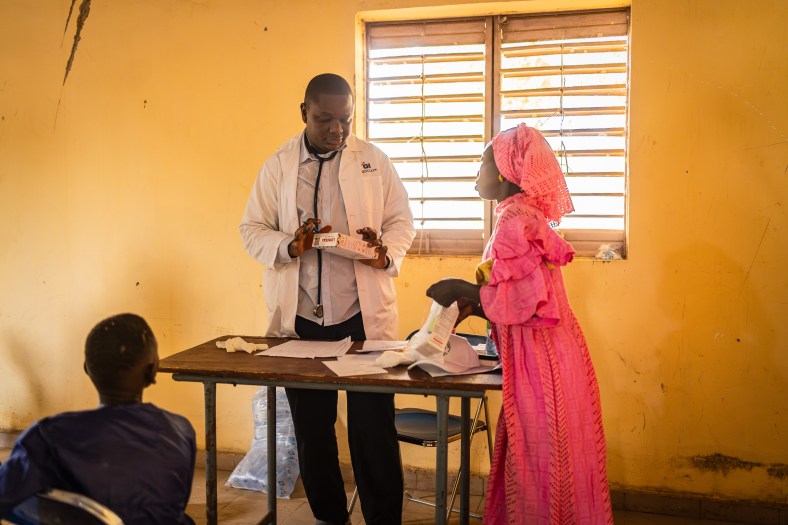
We center the leadership of those often overlooked: grandmothers, young mothers, religious leaders, the auntie who knows everyone and everything. We’re not building systems that rely on outside expertise—we’re building ones that communities can own and sustain.
And we do this because we’ve learned something many well-meaning institutions still miss: progress that lasts cannot be outsourced. It must be rooted in dignity, trust, and deep local ownership.
Still, even the most effective grassroots efforts need support. As U.S. institutions scale back, individual Americans can step in—not with saviorism, but with solidarity. Your support—of organizations like FOHSEN and countless others—can be the difference between neglect and transformation.
Sometimes, the price of your daily latte can fund a home visit from a trained health worker. A few minutes of your attention can redirect a life’s trajectory. In a world where indifference is easy, choosing action is a radical and necessary act.
Because the strength of a nation is not measured only by its policies—but by the compassion and commitment of its people.
We’re at a crossroads. The U.S. government may be stepping back from global leadership. But you don’t have to. You can be part of something bigger—something that honors the dignity and determination of communities rising to meet their own needs.
This isn’t about charity. It’s about justice.
It’s about investing in people, not saving them.
It’s about building a world where those most affected define what success looks like.
So yes, America, you may be stepping back. But I hope you’ll also step forward.
The only question is: Will you answer the call?
 Talla Cissé
That’s what I’m talking about!
LikeLiked by 1 person
It is crazy how the day that I am looking for answers on my next steps, I go into the spam of an email that I do not use regularly, and I run across your words- your much needed words. I am so glad to see your efforts, and to see them being used for your community. I was in awe of you when you didn’t even know it, and I am still….
Charita Sellers
LikeLike